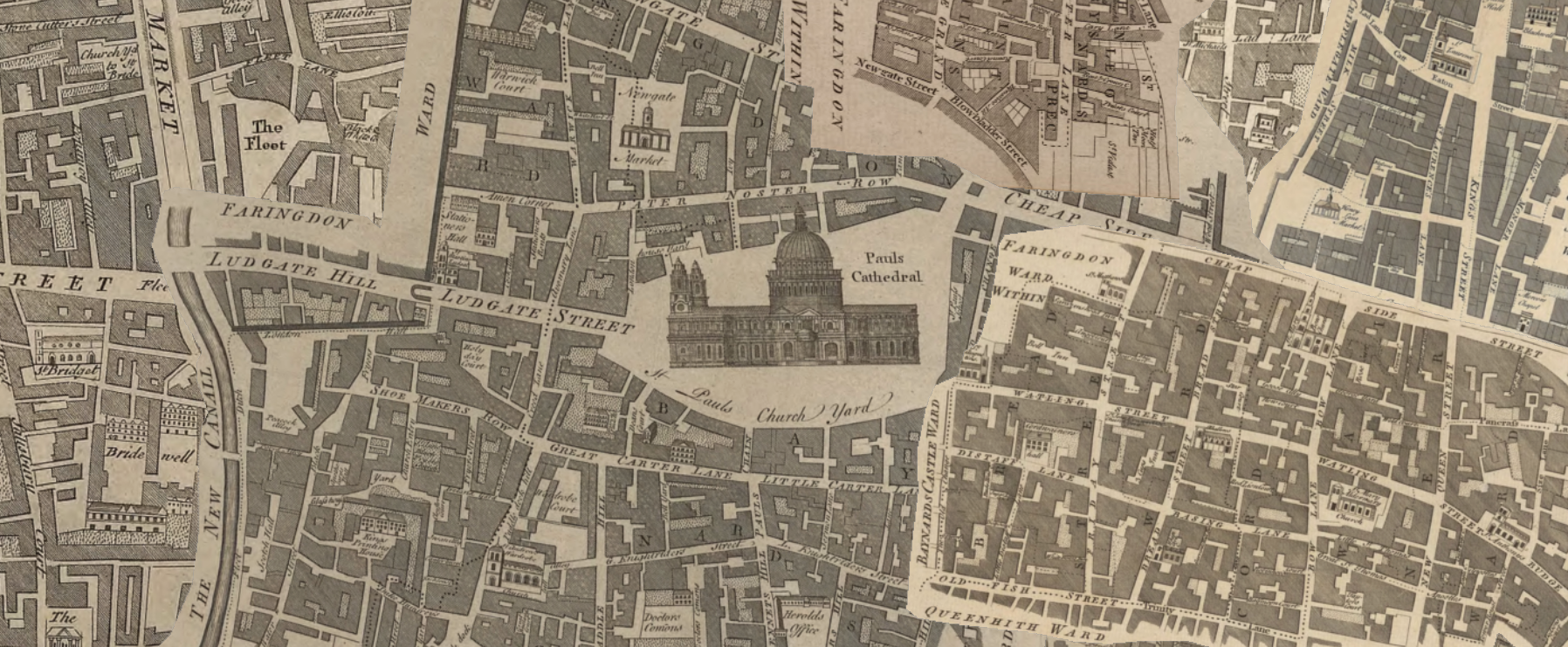
Cover image: William Maitland (1756) on Layers of London
What is georeferencing?
Georeferencing is when an image is assigned geographic coordinates that match a digital map. This is most often used to map scans of historical maps or aerial photographs against a modern map.
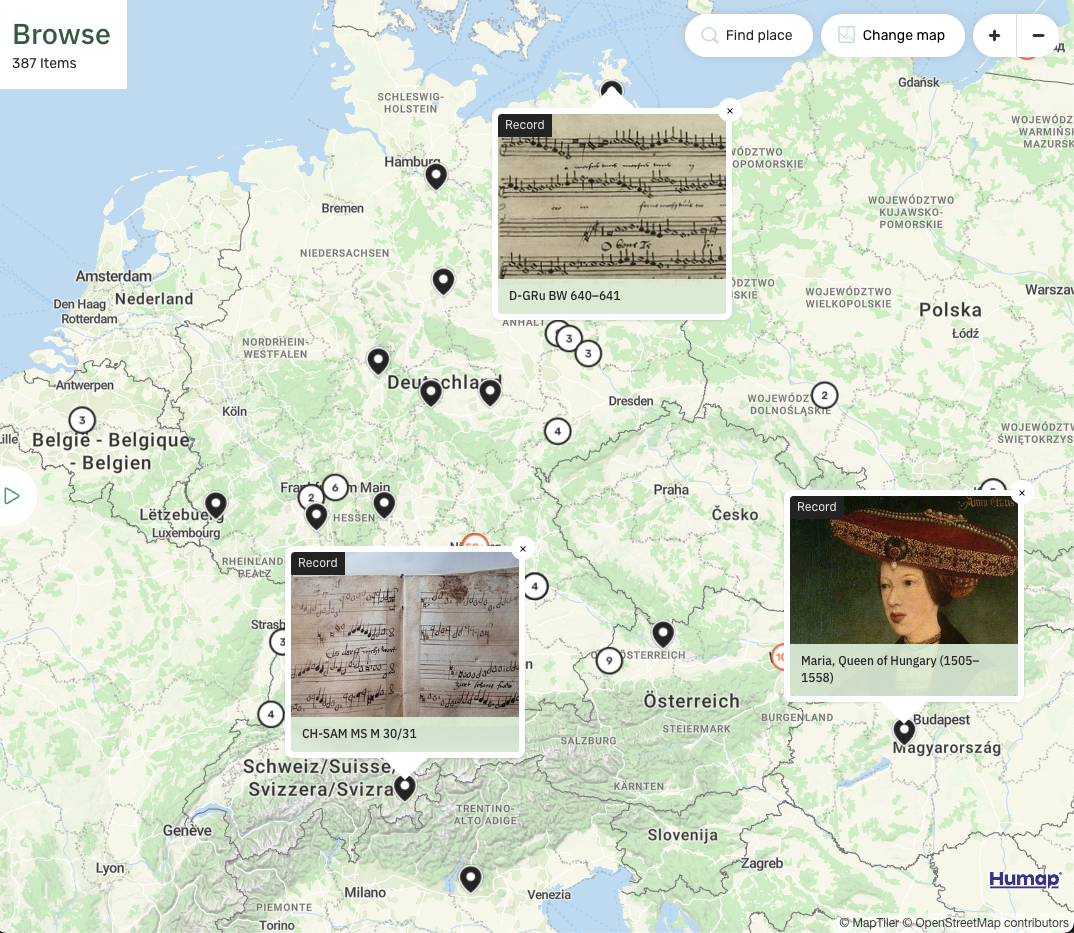
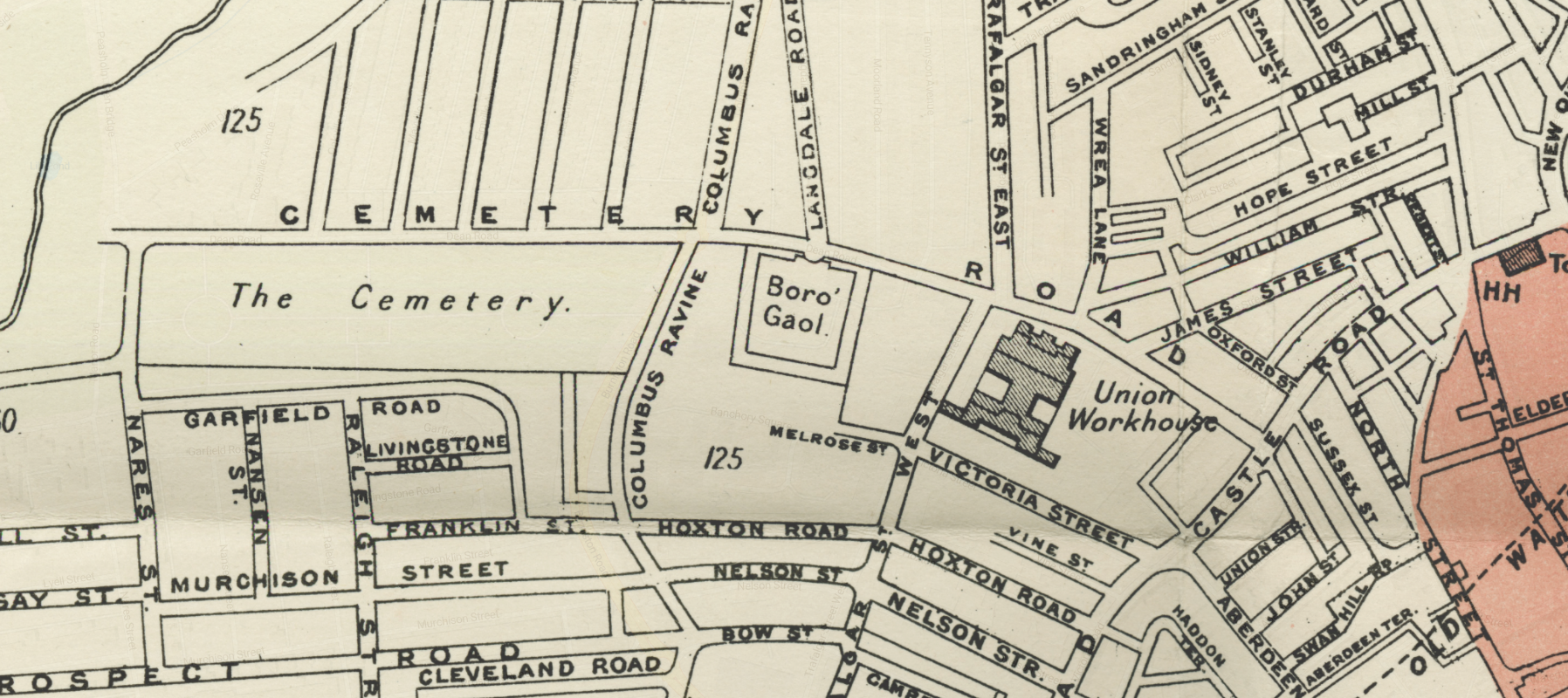
Locations that appear both on the modern digital map, and in the image, are twinned – for example by matching a specific street corner that appears in a historical map to that same street corner as it appears on a modern map.
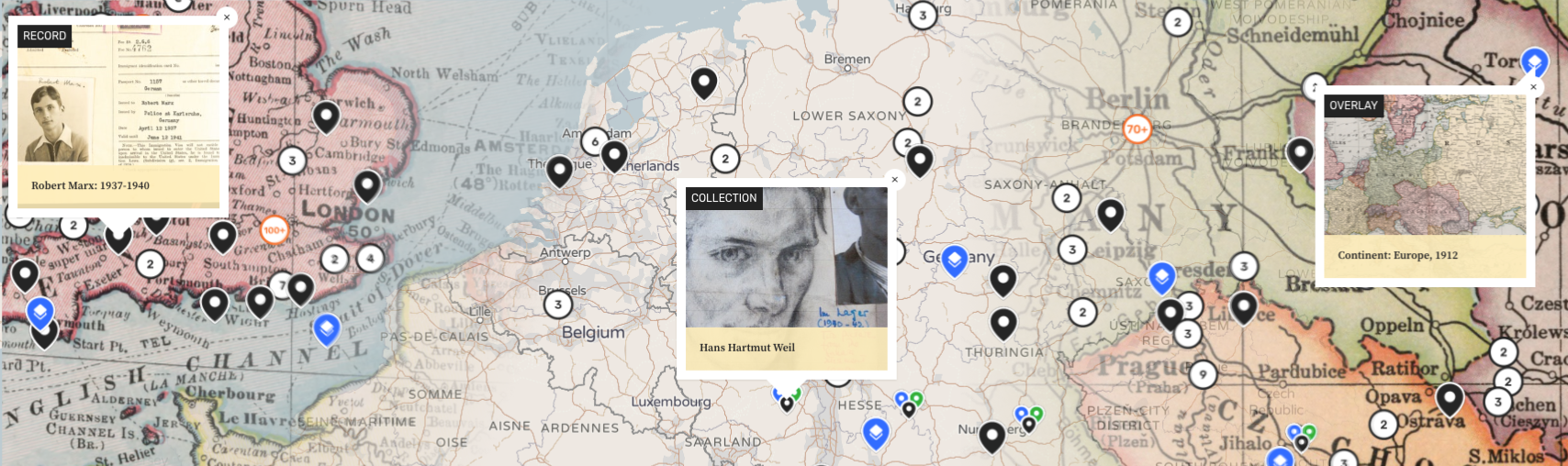
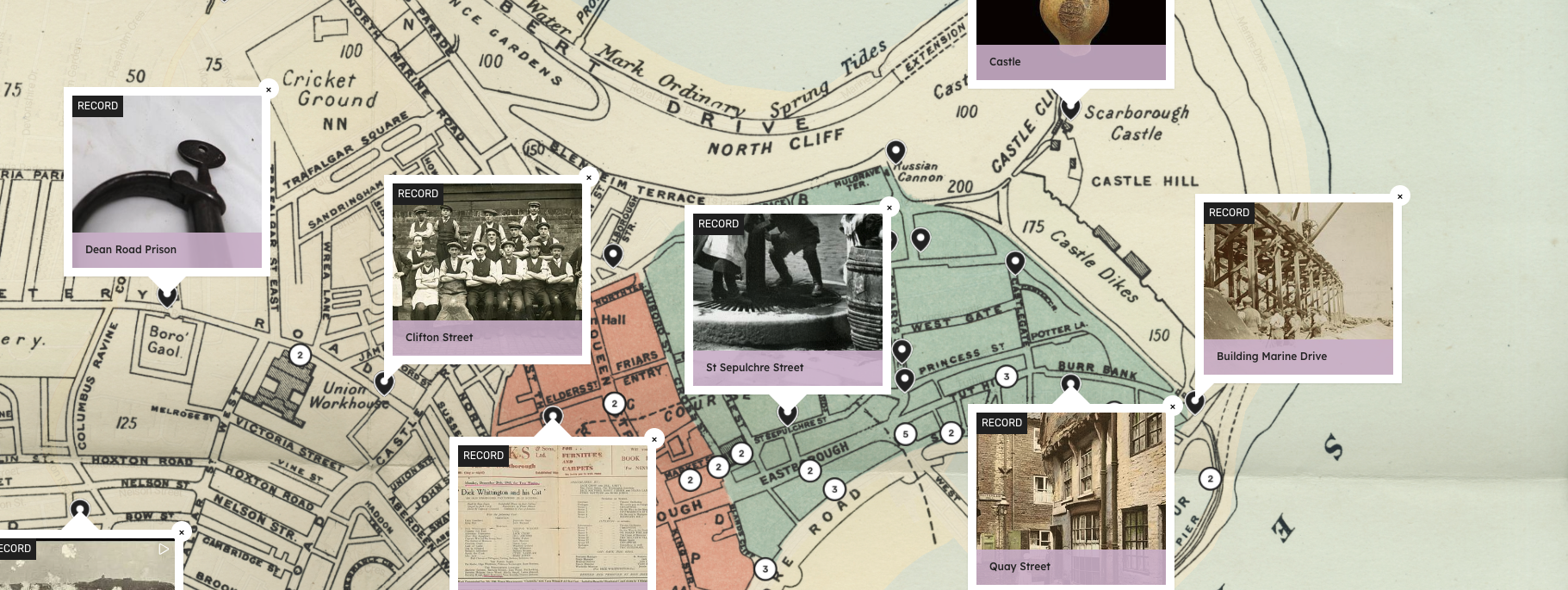
This lets users layer the historical map or aerial photograph over a modern base map (or other historical maps or aerial photographs) and use tools to compare and contrast them.
Georectified historical maps and aerial photographs are fantastic educational tools, especially for visual learners. They are also extremely popular with users, so we heartily recommend using them in your story mapping projects if appropriate.
A small selection of georeferenced maps on Humap:
- RAF Aerial Collection (1945-1949) on Layers of London
- Charles Booth’s Poverty Map (1886-1903) on Layers of London
- Atlas: World Map, 1900 on the Refugee Map
- Europe, 1926 on the Refugee Map
From our help & guidance section
- How to add historical map and aerial photograph overlays into Humap
- How to export data from ArcGIS an QGIS into Humap
How to georeference historical maps:
At present, we can’t georeference things in Humap, although we can do that for you for an additional fee. Contact [email protected] for more information.
If you would like to do it yourself though, here are some tools:
- QGIS Georeferencer (free)
- MapWarper (free)
- OldMapsOnline georeferencer (free)
- ArcGIS Pro (paid)
- MapTiler Georeferencer (paid)
Other resources:
- Basic geo-referencing workflow, National Library of Scotland
Give it a go!
The David Rumsay Map Collection, in collaboration with Oldmapsonline.org, has a portal where you can georeference maps from the David Rumsay Collection. You can also upload and georeference your own maps. It’s quite fun and oddly relaxing.
The David Rumsay Map Collection also allows some of their historical maps to be used for digital projects with attribution. The examples above from the Refugee Map are items from the David Rumsay Collection.